Weddings are expensive affairs. For reference, the average American wedding costs around $36,000, and for young couples just starting out, that’s a steep price tag. So it’s pretty common for parents to chip in and help cover the costs.
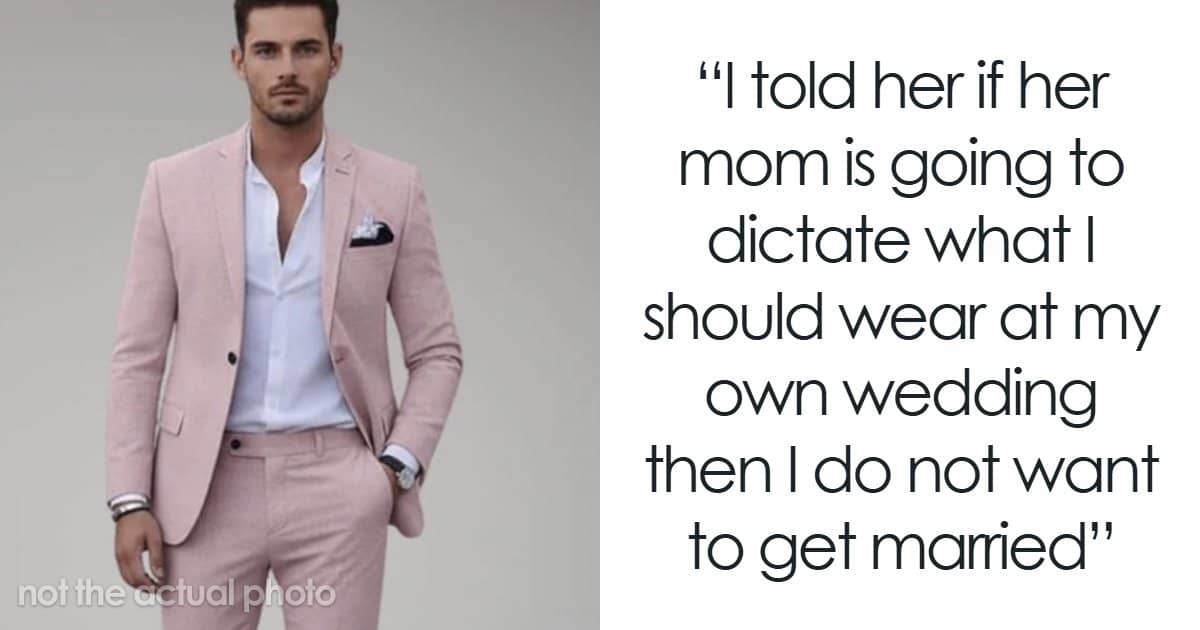
But as one Redditor found out, financial help can sometimes come with strings attached. His future mother-in-law offered to pay for a large chunk of the wedding, and before long, she was trying to control nearly every detail. When she moved on to dictating what he should wear on his own wedding day, he drew a hard line—saying that if she gets to pick his suit, he doesn’t want to get married at all.
That ultimatum didn’t land well with his fiancée. Read the full story below.
RELATED:The groom’s mother-in-law offered to cover a large chunk of the wedding, and with that came a long list of opinions about how things should be done

So he warned his fiancée that if her mom attempted to pick his suit too, he’d call the whole thing off




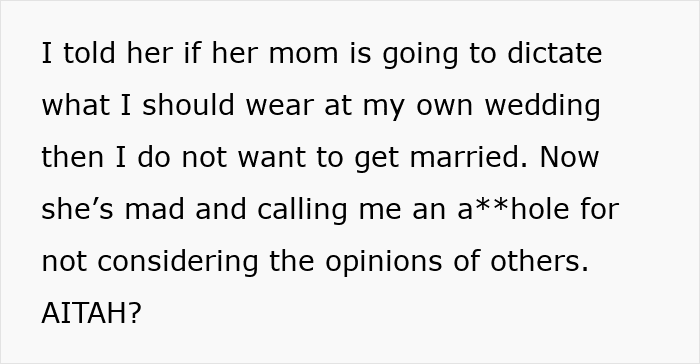
Image source: FancyDude-ThrowRA
As exciting as weddings are, they come with overwhelming stress and costs

Planning a wedding might as well be a reality show where you’re forced to watch your bank account drain. Between the venue, catering, flowers, photography, and everything else, costs add up faster than most couples anticipate.
According to Zola’s Wedding Cost Index, venues alone average $8,573, typically ranging from $6,900 to $10,300 depending on location and season. Catering claims a major expense at an average of $6,927, and you’re paying that before centerpieces are even on the table. Bar services add another $5,542 on average, ranging from $4,400 to $6,600.
Photography packages average around $4,400, typically ranging from $3,500 to $5,300, because you want someone who knows how to capture the moment when your grandmother tears up during the vows, not someone who accidentally cuts off half the wedding party in every shot.
Flowers, which seem like they should be simple and affordable, somehow end up costing thousands. The average couple spends $6,345 on flowers and floral design, with typical costs ranging from $5,100 to $7,600. That’s a real luxury for arrangements that last a single day.
The stress doesn’t just come from the price tags. According to a survey shared by Lifestyle Daily, over one in four brides report that planning their wedding is the most stressful event of their life.
The decisions feel endless and the pressure to make everything perfect can strain even solid relationships. Many couples find themselves lying awake at night wondering if they really need chair covers or if anyone will actually notice the difference between ivory and champagne linens.
So yes, it’s completely understandable why the couple in this story accepted financial help from their parents. When someone offers to lighten that overwhelming burden, it’s hard to say no.
Couples can ask their in-laws to chip in, but accepting money often means accepting their opinions

As much as a wedding is an event for you and your significant other, there will obviously be guests, including family and relatives. And those people often have plenty to say about what they think the wedding should look like, especially if they helped pay for it.
The numbers across different research studies reflect how many couples struggle to keep the peace with parents and in-laws while preparing for their big day. One survey found that 18% of people felt stressed about appeasing their in-laws during the planning process.
Another revealed that 25% said their future in-laws had “must-haves” or non-negotiables for the wedding. Perhaps most telling, one newlywed report found that 81% of parents are involved in wedding decision-making. That’s a lot of weight to carry on your shoulders.
Money plays such a significant role in this dynamic because when parents write checks, many believe they’ve earned decision-making power. In their minds, they’re not being controlling but rather ensuring their investment reflects well on the family.
Unfortunately, the author of this story is dealing with exactly this situation with his future mother-in-law. What makes it worse is that his fiancée seems more willing to accept all of her mother’s demands than stand up for the things she and her partner actually want. But experts say couples don’t have to sacrifice their vision just because someone else is paying.
According to advice from Brides magazine, most conflicts during wedding planning stem from emotional insecurities and family transitions rather than actual wedding details.
Licensed marriage and family therapist Lauren Mollica explains that mothers-in-law often struggle with their changing role in their child’s life, while licensed psychotherapist Dr. Akua K. Boateng notes that controlling behavior usually reflects unmet dreams or fear of losing relevance in the family.
The solution starts with understanding what’s driving the behavior. If your mother-in-law is being negative or trying to control everything, it might help to schedule a conversation where you ask what would help her get excited about the day and whether she’s processing any disappointments.
Before accepting financial help, discuss expectations directly about how the money will be used and what level of input comes with it. When you need to set boundaries, acknowledge her generosity first, then calmly explain which decisions you and your partner want to make yourselves.
For example, you might say “We’re so grateful you’re covering the catering. That means the world to us. We’d love your input on the menu, but we’ve got the attire figured out.” Having your partner lead these conversations with their own parent usually works better than you doing it alone.
At the end of the day, how you navigate wedding planning conflicts sets the tone for your future as a married couple. Yes, compromise matters and open communication with your in-laws is important. However, accepting financial help doesn’t mean surrendering control over every decision. Remember that you’re adults planning your own wedding, and you have the right to make choices that reflect your vision. It’s your special celebration, after all.
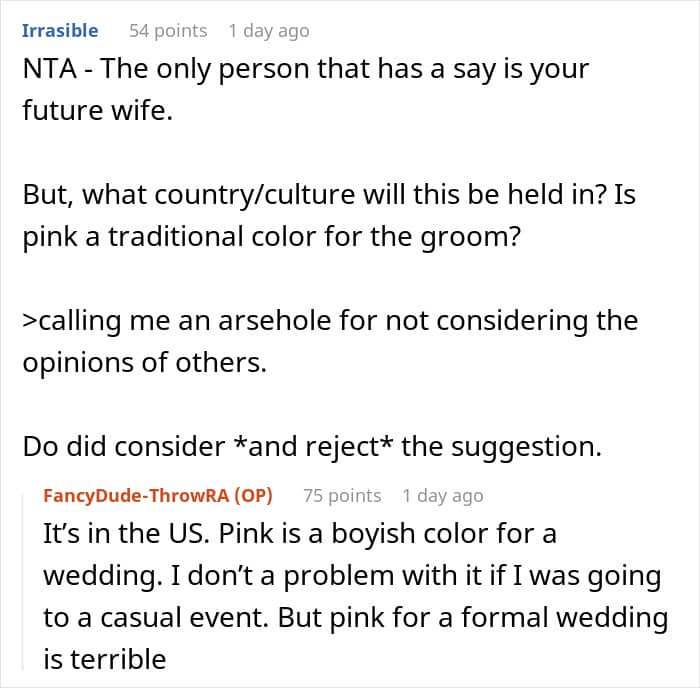
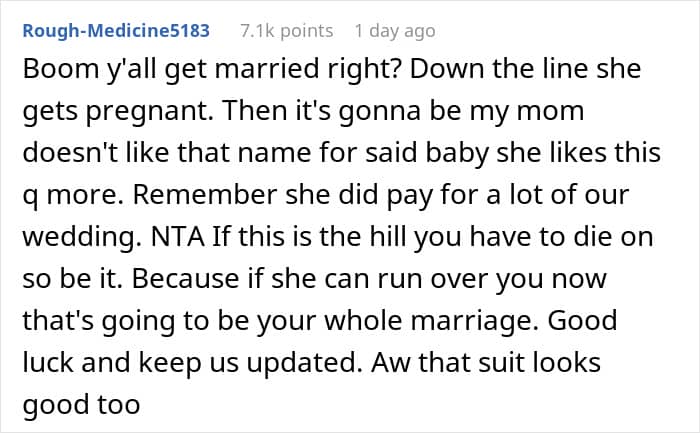
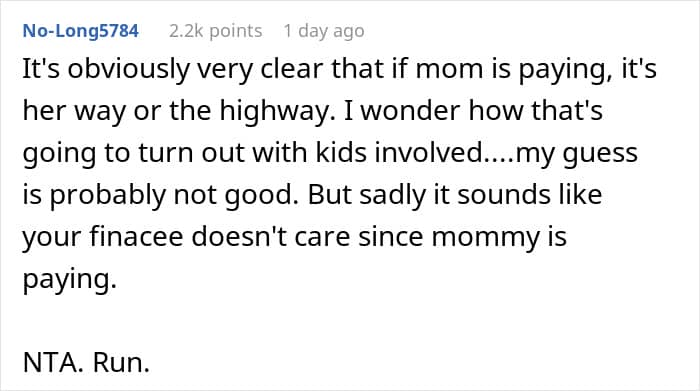
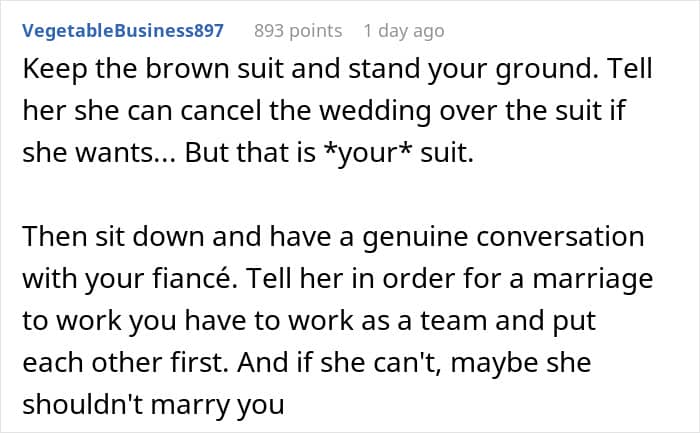
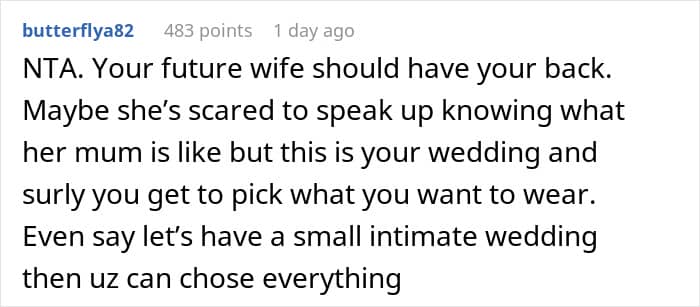
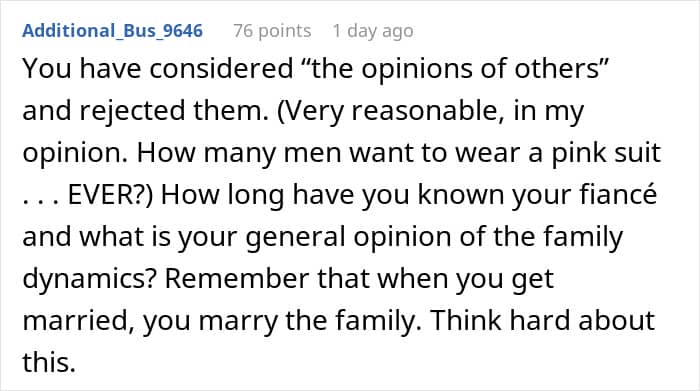
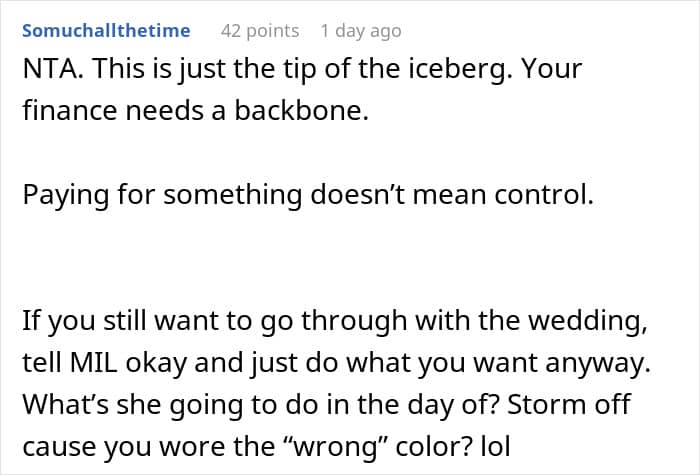
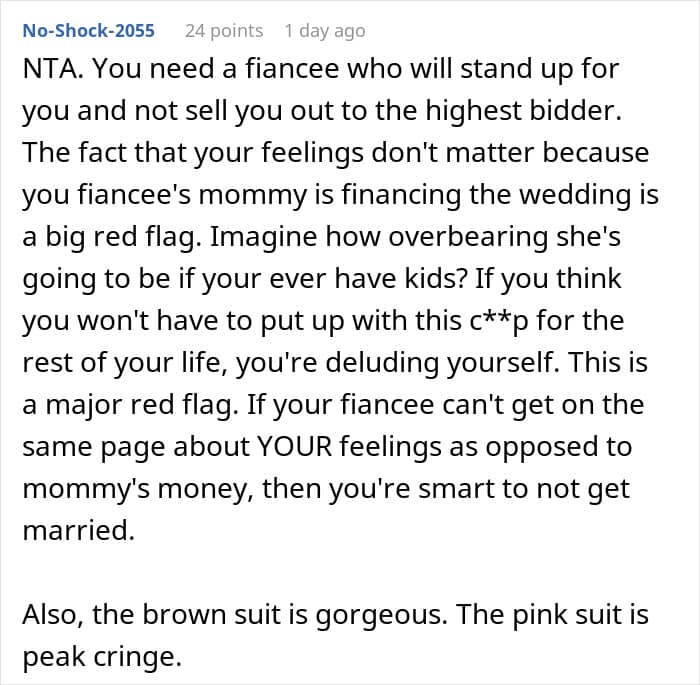
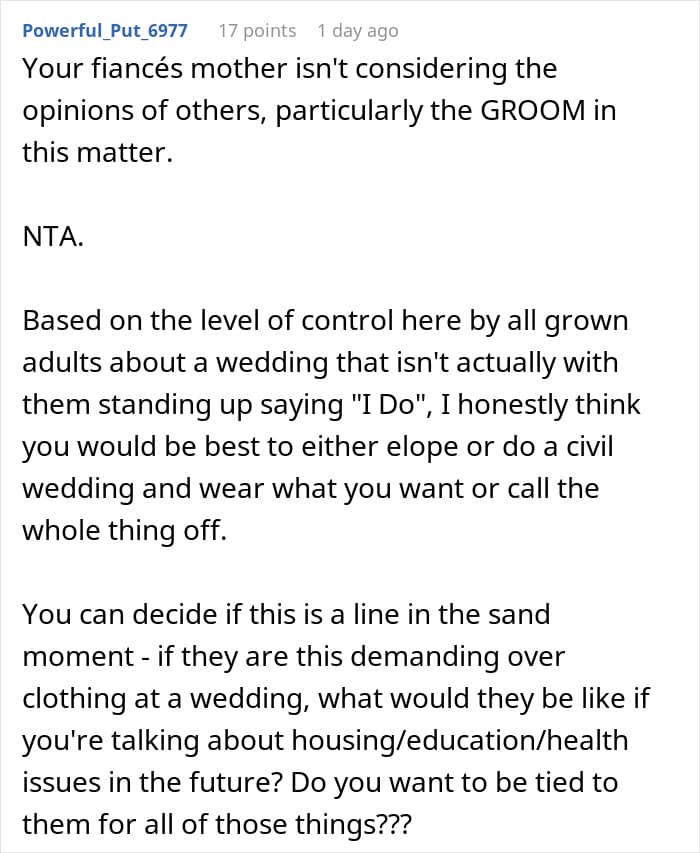
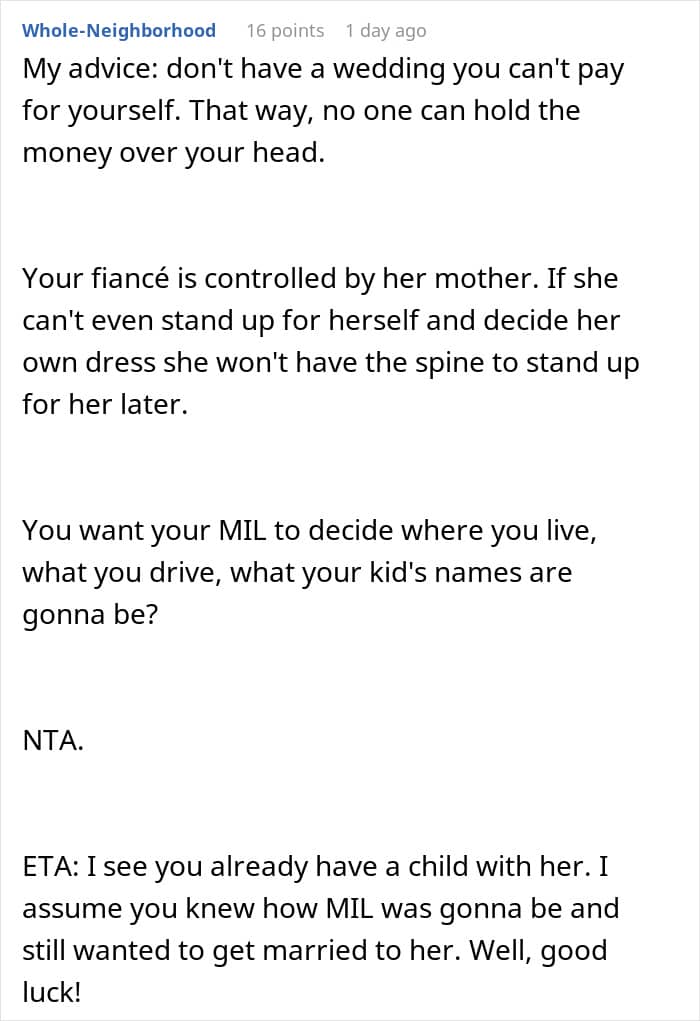
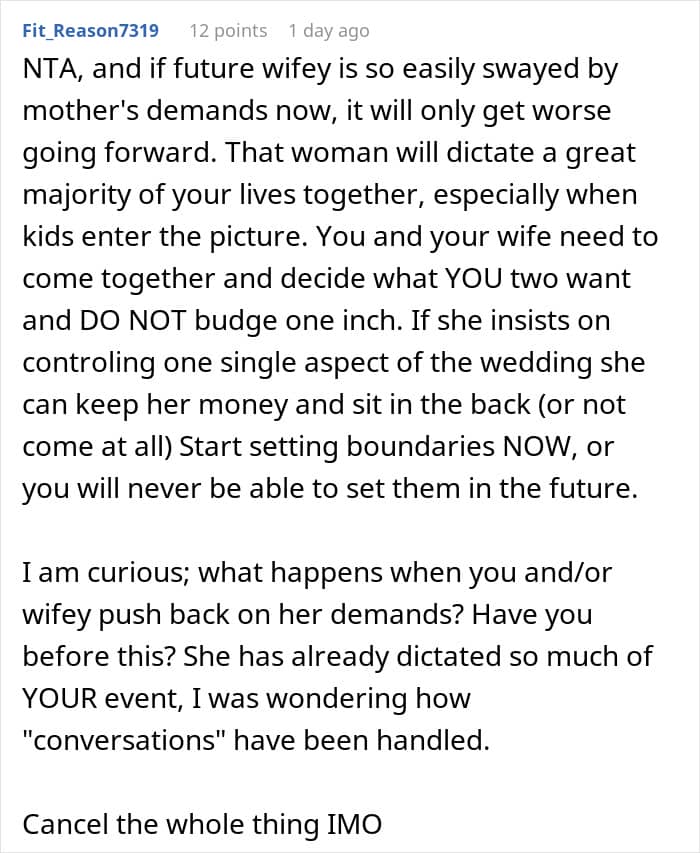
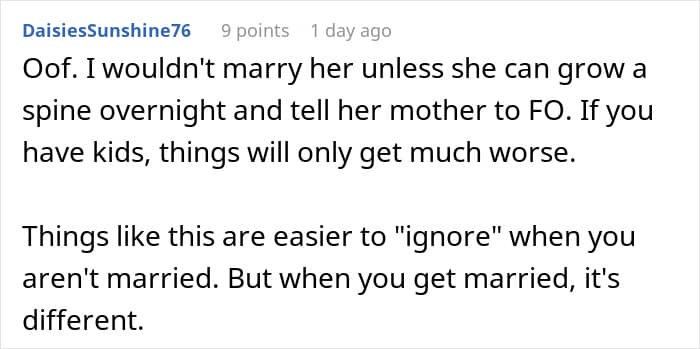
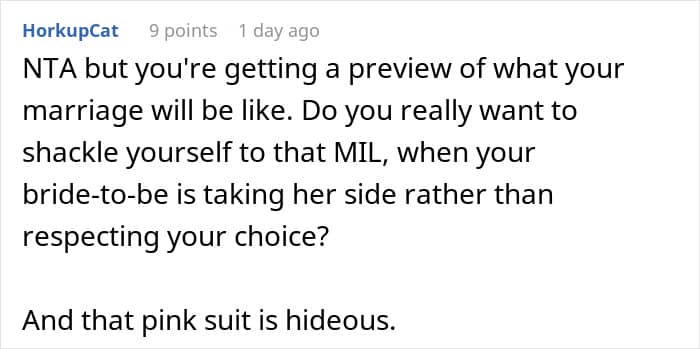
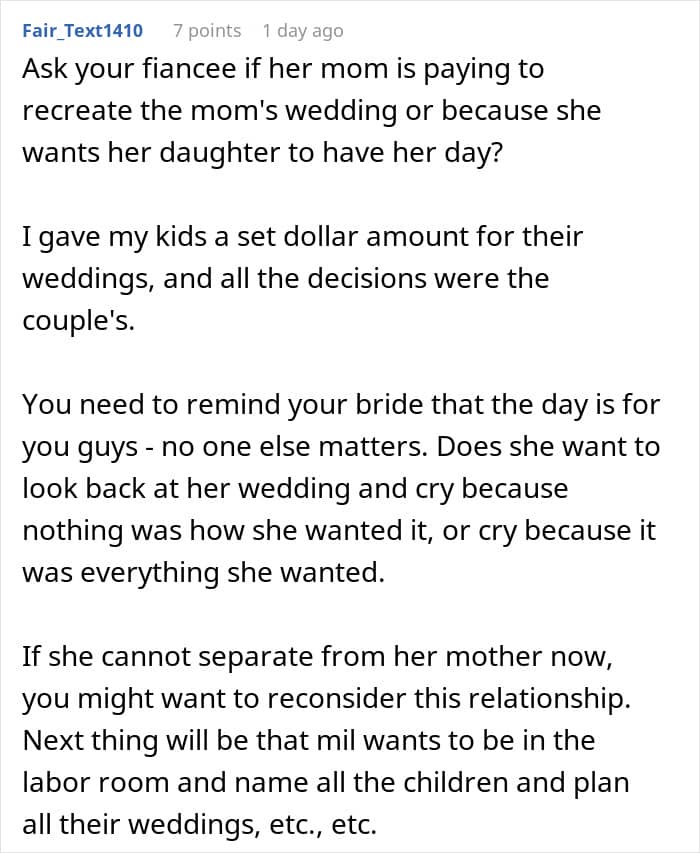
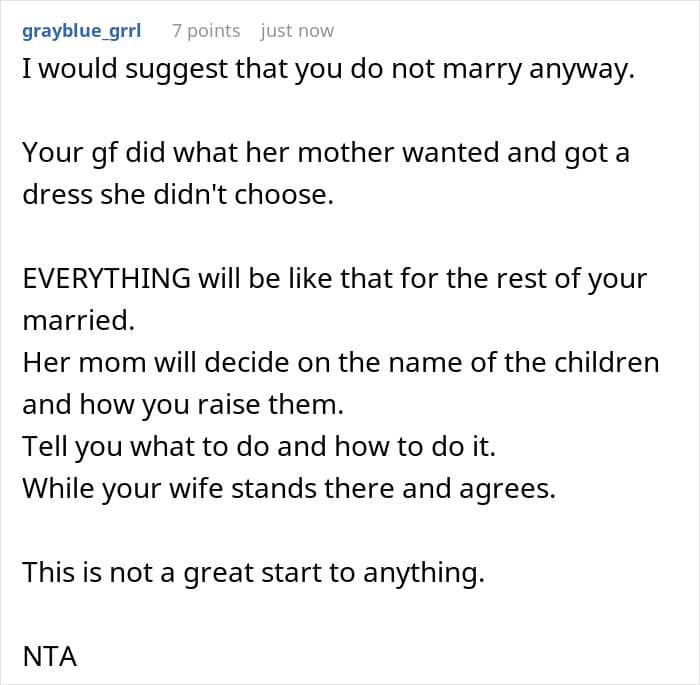
Readers unanimously sided with the author, saying his wedding outfit should be his choice