A school is supposed to be a place where we go to learn, make new friends and figure out what we want to do for the rest of our lives.
But some also regularly deal with bullies who knock over lunch trays, pass cruel comments, and make life miserable for anyone who seems different.
And when you see it, it raises a tricky question. How do you respond?
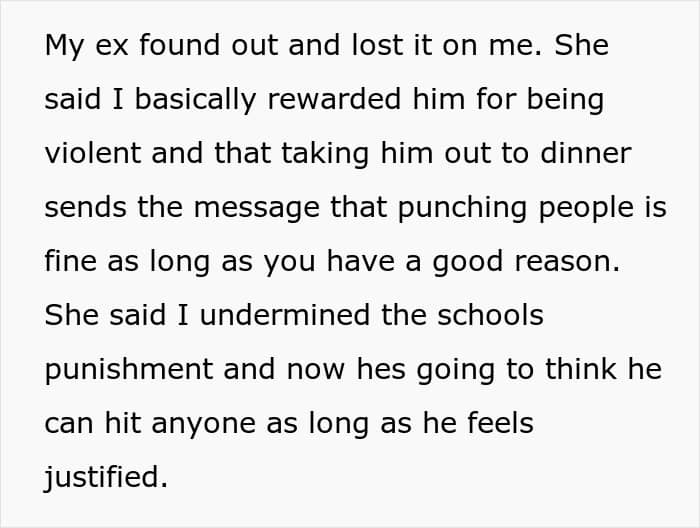
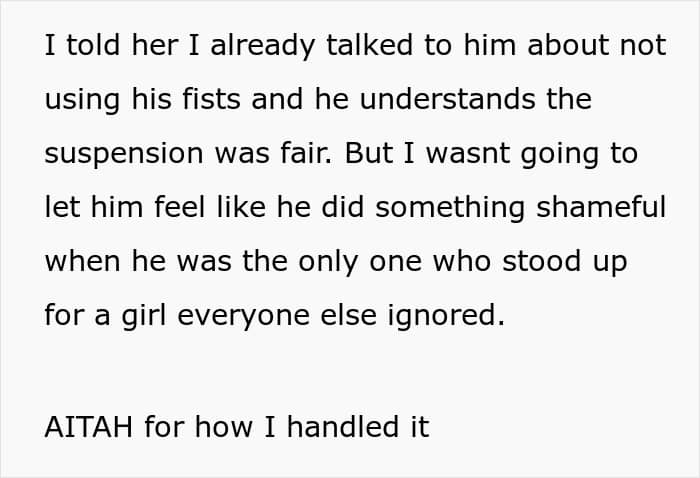
A dad recently shared on Reddit how his son stepped in to protect a girl at school who had been getting picked on by a group of boys for months.
But his son was quickly suspended when he punched one of the bullies.
The father asked netizens whether he was wrong for being proud of his son, or if he should have handled the situation a bit differently?
RELATED:A girl was being bullied for months by a bunch of guys at her school
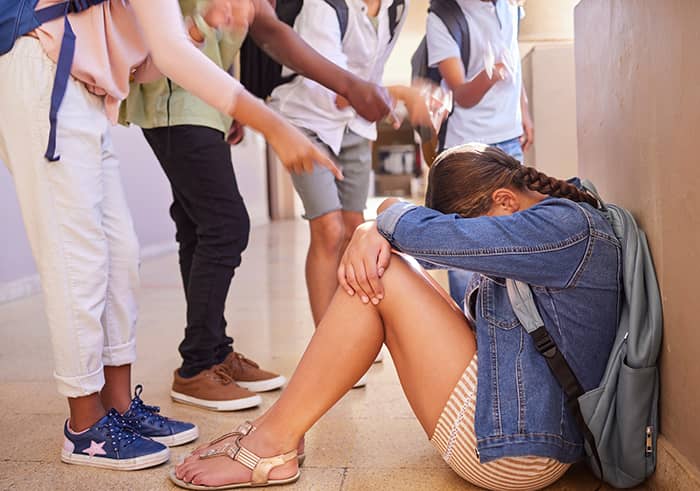
Her classmate stepped in to protect her by punching one of the bullies
Bullying is a major public health and education concern
Even though there’s more awareness and laws to stop it, bullying continues to be a widespread problem.
Recent surveys show that bullying affects more than one in three American teens.
Some kids are hit even harder — girls, LGBTQ+ teens, younger students, and those with disabilities are the most targeted.
A 2024 study found that over one in five kids in England face bullying regularly, and it affects kids with special needs or those from lower‑income families more.
And this isn’t just “kids being kids” — bullying is a serious problem that can leave real scars.
It can make kids anxious, depressed, skip school, or even deal with long-term emotional trauma.
Bullying is such a serious health issue that even Pope Francis spoke out about it in 2025, saying, “If at school you start fighting among yourselves or bully each other, you’re preparing for war, not for peace.”
We spoke to Helen Cowie, Professor Emeritus at University of Surrey, to understand the impact of bullying and if violence is ever the answer.
“If the bullying is not challenged, the impact can be very serious, emotionally and socially. The psychological effects of persistent bullying on the target child or young person can affect self-esteem, emotional well-being and mental health. These effects can persist into adult life so it is extremely important to stop the bullying as early as possible,” she says.
Cowie believes that it’s not a good idea for a child to respond to being bullied in a violent way. “For one thing, the bully may be stronger than the child and may have a coterie of friends who will also turn on the victim. Meeting bullying with violence is likely to escalate the problem rather than resolve it. There are several things that a bullied child can do.”
“Tell an adult. In this case the child has already told the parent who should immediately contact the school to alert the staff about what is happening. The school will have an anti-bullying policy with action built in on how to address the issue at individual, class, whole school levels A key message is ‘don’t suffer in silence’,” she adds.
Cowie says that standing up for others is a really noble thing to do as long as you don’t put yourself in personal danger.
The responsibility shouldn’t fall on the child
However, at times, bullies aren’t picking on someone because of who they are — they might act out to feel powerful, fit in with the crowd, or just copy the violent behavior they see at home.
Violence is not always the answer to stop a bully. It usually just makes the conflict even worse. Experts say there are better ways to handle it.
Instead of fighting back, it’s better to speak up confidently, tell a trusted adult, or make sure the school authorities don’t let bullying slide.
“Bullying is generally repeated and has a negative — sometimes severe — impact on a child’s wellbeing. Adults must take bullying seriously. For some kids it is trauma,” Michele Borba, an educational psychologistand award-winning author, tells We.
“Bullying is intentional cruelty and never an accident. It’s usually against kids who cannot hold their own. And bullies generally continue to target the same child. As a parent, your first task is to try to hear the facts. Unfortunately, most kids don’t tell parents or teachers that they are victimized because ‘they didn’t believe me.’ Believe your child, then gather other facts,” she adds.
But the onus shouldn’t always fall on the victims themselves.
Just like this story, there have been several instances of schools suspending the victims when they tried to defend themselves or their friends.
The onus should be on the teachers and school staff to fix things and create a safer environment for the students.
“Teachers can foster peer support by encouraging students to learn more about each other and incorporating collaborative projects into the curriculum to better enable groups of students to work together,” says Dr Nia Heard-Garris, a pediatrician and researcher in Chicago.
Experts also recommend some steps to help your child as a parent:
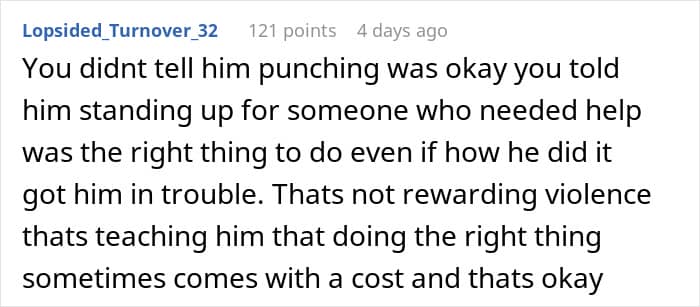
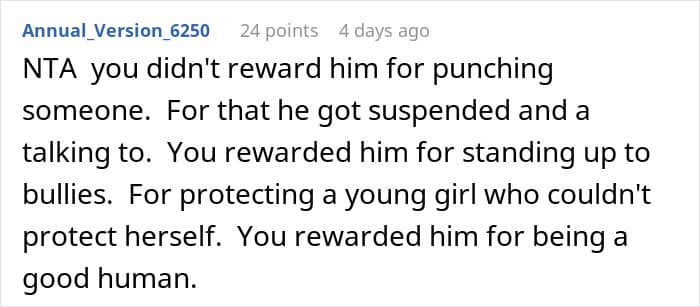
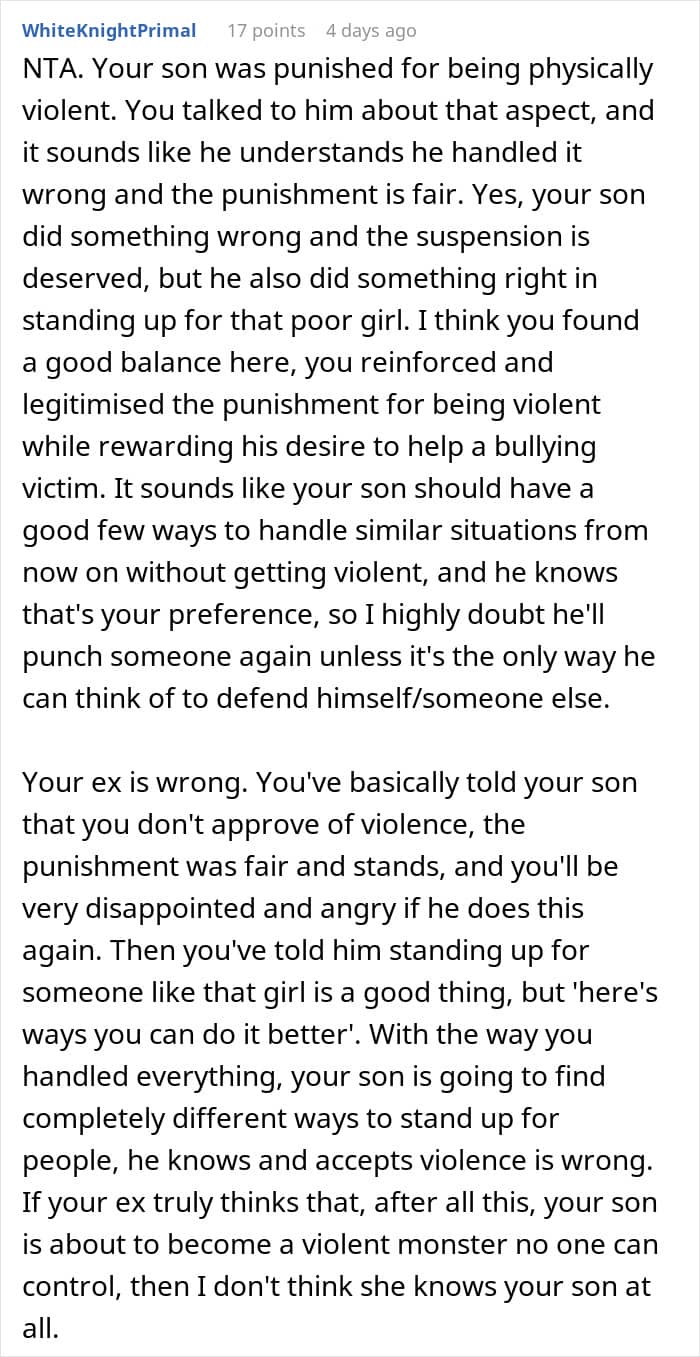
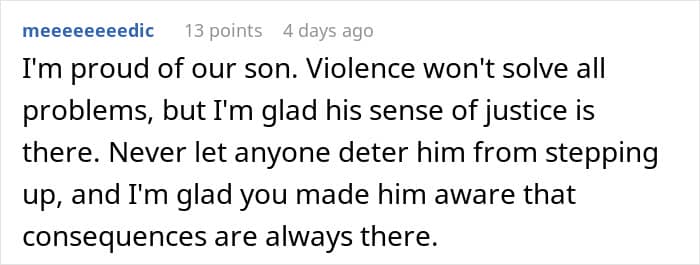
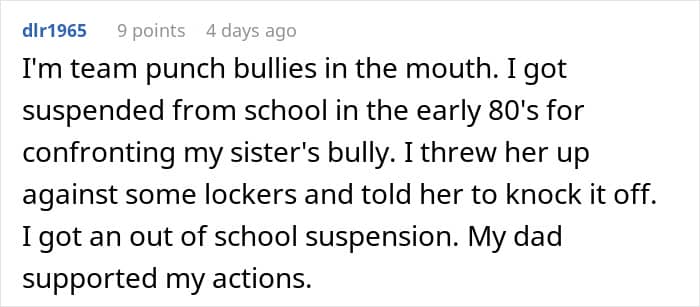
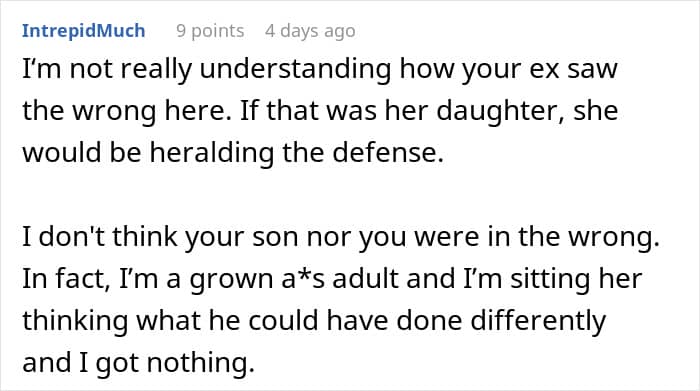
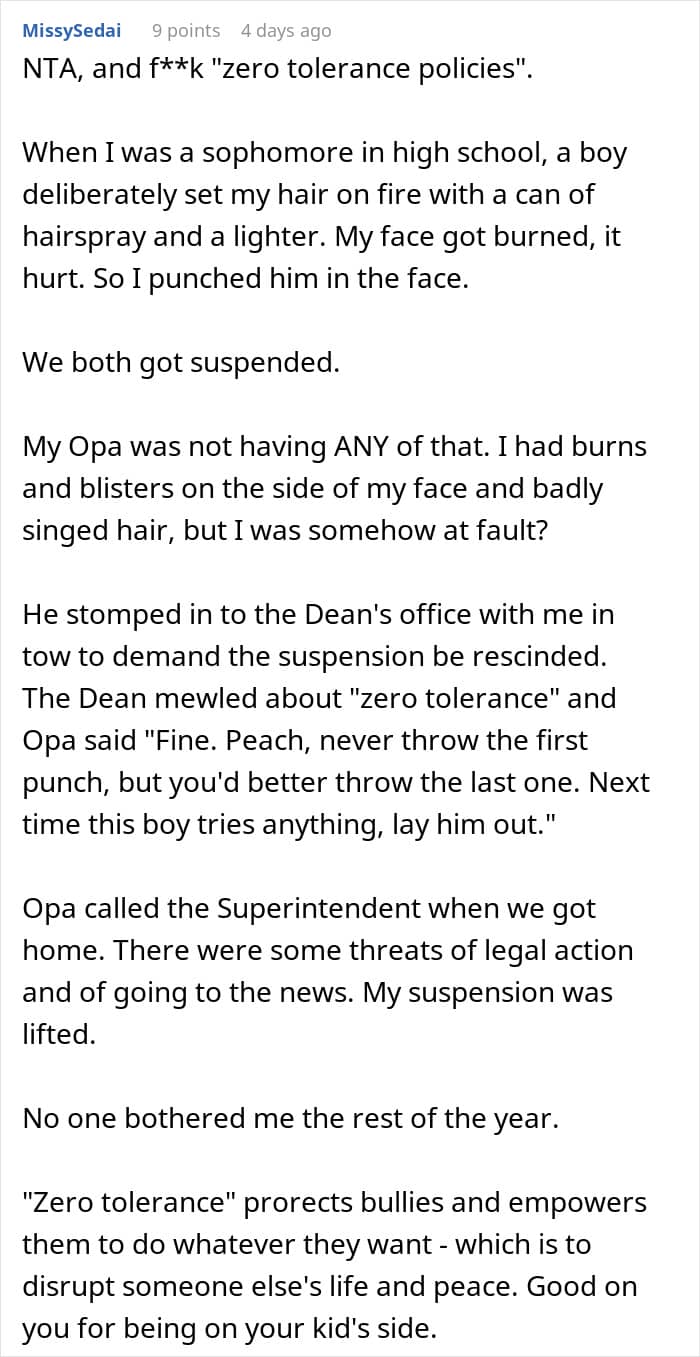
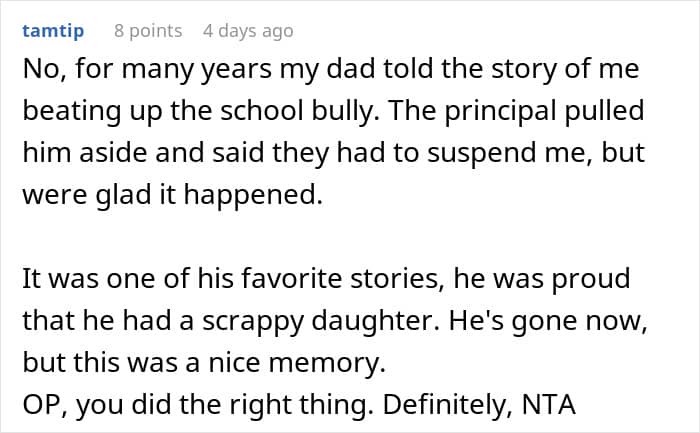
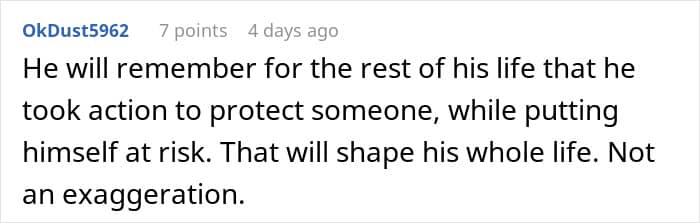
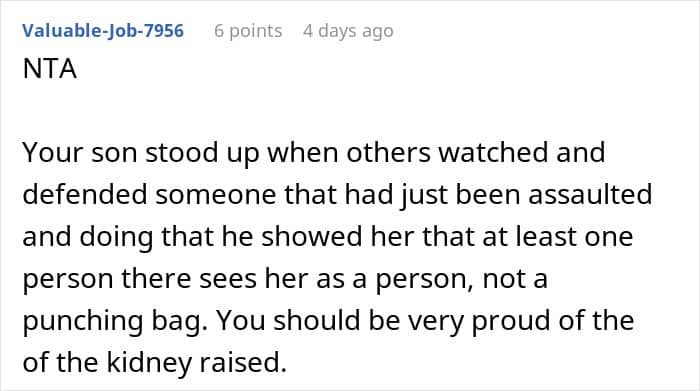
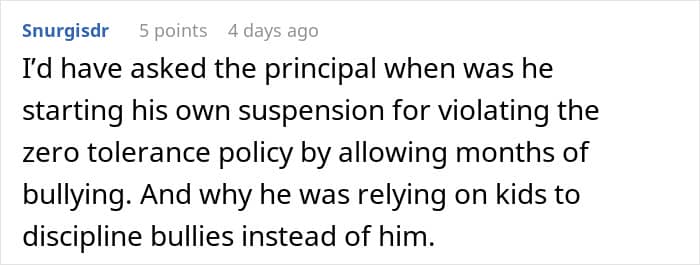
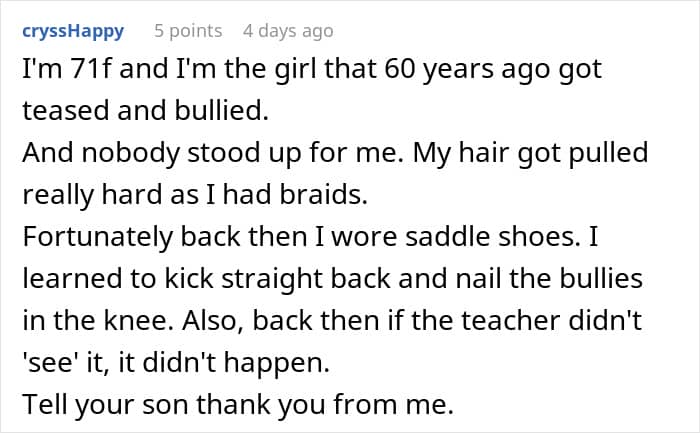
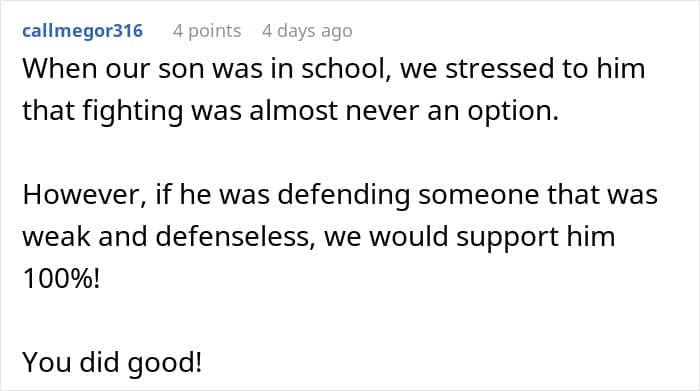
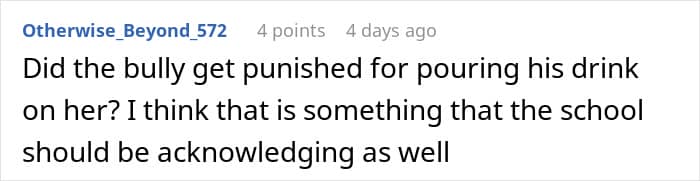
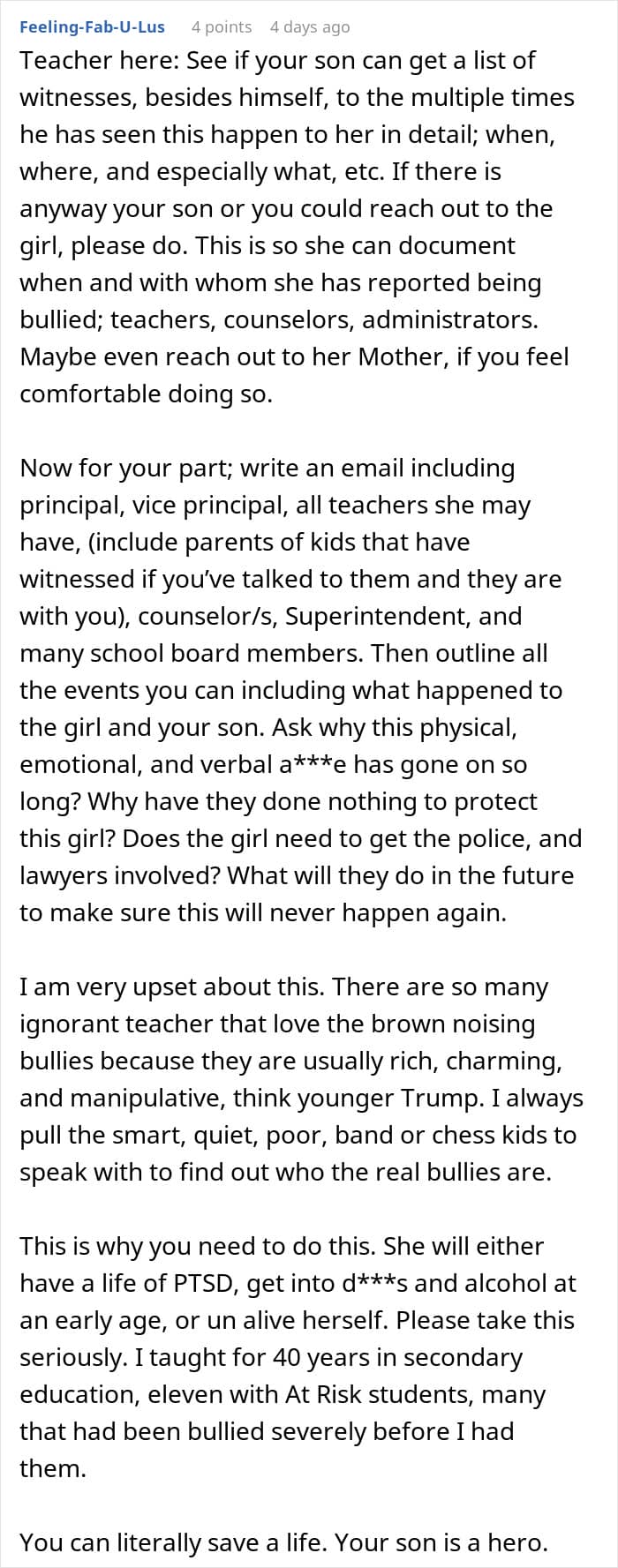
Give full attention to your child and their stories, and make sure that they know you believe them.Handle the situation with kindness and stay calm, because your child might be scared or embarrassed and they need to know that you’re on their side no matter what.Encourage them to let their feelings out, whether that’s by talking to you, drawing, or writing in a journal.Reach out to a child therapist if the kid needs someone to talk to. Having a professional can help in preventing long-term psychological effects of bullying.Many readers agreed with the dad’s decision to support his son











But some readers said violence isn’t the answer